


How it works
Run structured research studies in minutes using AI-powered synthetic respondents.

1
Ask your question
Start with what you want to understand.Describe your situation and add as much context as possible:

what your business does
what you are trying to figure out
what you already know
what feels unclear
2
Describe your audience
The platform will ask about your target audience.Add everything you know:
who your customers are
how they behave
what matters to them
If nothing is known, leave it empty. The platform will still generate respondents.
3
Choose methodology
The platform will suggest a research method.
Right now, only synthetic focus groups are available.
More methodologies will be added over time.
4
Review hypotheses
The platform will generate research hypotheses.Carefully review them:
edit what feels inaccurate
add your own if needed
5
Review respondents
The platform will generate synthetic respondents.Check if they match your audience:
remove irrelevant profiles
regenerate if needed
add new ones
6
Review questions
The platform will generate discussion questions.Review them carefully:
edit unclear questions
remove unnecessary ones
add your own
Make sure all important topics are covered.
7
Run the focus group
The synthetic moderator runs the discussion.You can:
watch responses in real time
read as the conversation unfolds
or leave and come back later
8
Get insights
After the discussion, the platform generates a report.It includes:
key insights
behavioural patterns
answers to your questions
hypothesis validation
recommendations
Full transcripts of the conversation are also available.
What you can test with synthetic respondents
Offers and services
reactions to a new product or service
whether an offer feels relevant
what people would want included
what makes an offer more attractive
what feels too much, too little, or unnecessary
what people would compare it to
Brand and naming
reactions to a brand name
reactions to a product or service name
what a name suggests to people
whether a name feels clear, memorable, or confusing
whether your brand feels trustworthy
what kind of image your brand creates
Pricing perception
whether the price feels too high or too low
what people expect at that price
what would make the price feel more justified
how people talk about value for money
what feels expensive vs worth paying for
Messaging and positioning
how people react to the way you describe your business
which messages feel clear
which messages feel vague or generic
what wording feels more natural
what people understand from your description
how people describe it in their own words
Ads and communication
reactions to ad ideas
reactions to a campaign or promotion
what message stands out
what feels believable or exaggerated
what makes the idea more appealing
what would make someone want to learn more
Product concepts and features
reactions to a product concept
whether a feature sounds useful
what concerns people have
what people would expect it to do
what feels appealing or unnecessary
how people imagine using it
Customer needs
what people wish existed
what problems feel unsolved
what would make their life easier
what alternatives they are looking for
what they cannot currently find
Customer reactions
how people react to your business idea
what people like or dislike about an offer
what feels unclear or confusing
what builds trust and what doesn't
what people expect from a business like yours
what feels missing
What results look like
History
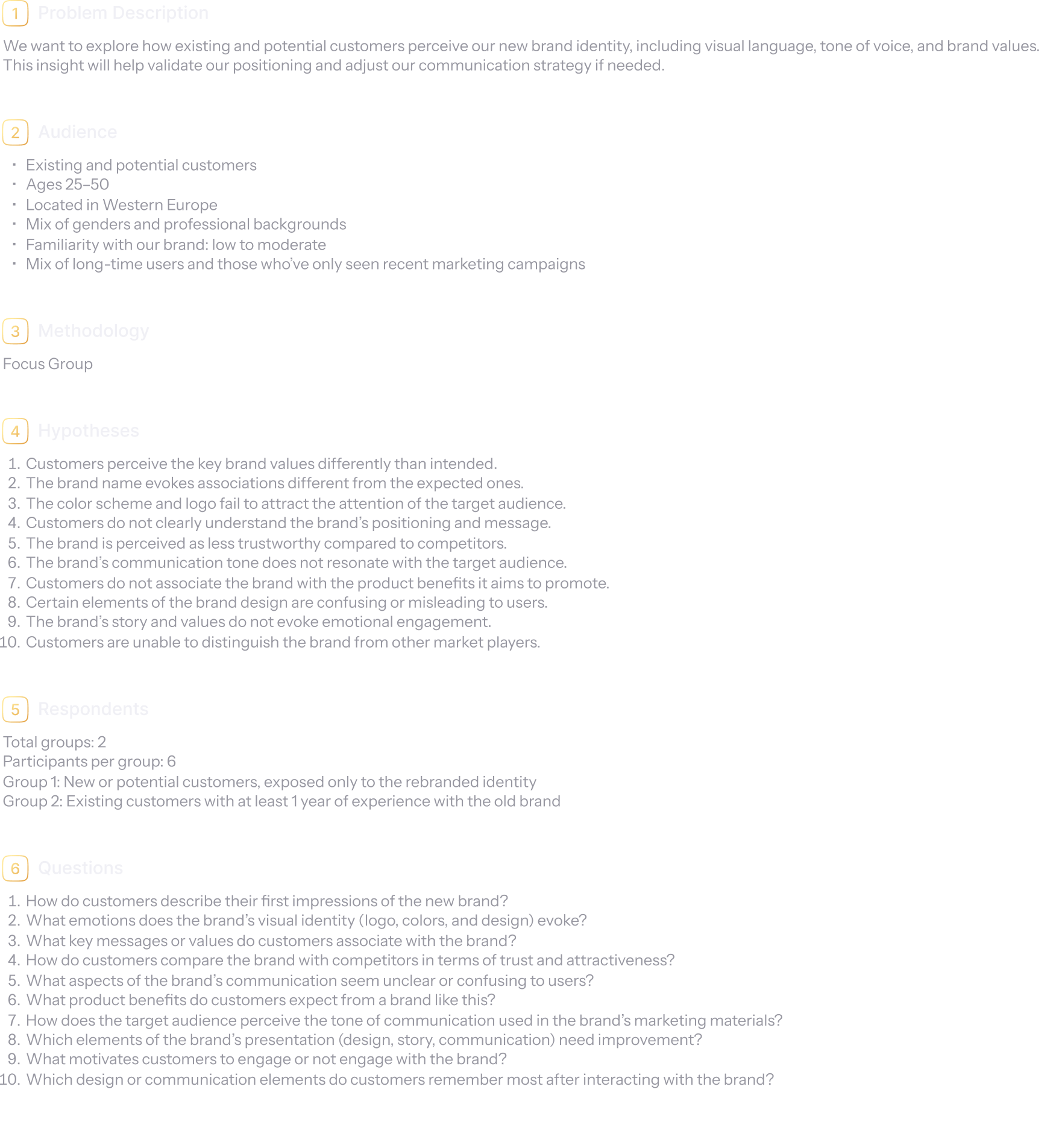
Make confident business decisions
Research tools are available for business teams. Contact us to discuss your research needs.
Buy for $16
Synthetic Respondents Ltd
AI research platform that replaces weeks of UX and market research with 6-minute synthetic studies trained on proprietary real-world behavioural data.
Company No. 16867861. Incorporated in England and Wales. Registered office: Crown House, 27 Old Gloucester Street, London WC1N 3AX.
Contact
For general inquiries and sales:
hello@synthetic-respondents.comFor technical support:
support@synthetic-respondents.com© 2026 Synthetic Respondents. All rights reserved.
How it works
Run structured research studies in minutes using AI-powered synthetic respondents.
1
Ask your question
Start with what you want to understand.Describe your situation and add as much context as possible:
what your business does
what you are trying to figure out
what you already know
what feels unclear
2
Describe your audience
The platform will ask about your target audience.Add everything you know:
who your customers are
how they behave
what matters to them
If nothing is known, leave it empty. The platform will still generate respondents.
3
Choose methodology
The platform will suggest a research method.
Right now, only synthetic focus groups are available.
More methodologies will be added over time.
4
Review hypotheses
The platform will generate research hypotheses.Carefully review them:
edit what feels inaccurate
add your own if needed
5
Review respondents
The platform will generate synthetic respondents.Check if they match your audience:
remove irrelevant profiles
regenerate if needed
add new ones
6
Review questions
The platform will generate discussion questions.Review them carefully:
edit unclear questions
remove unnecessary ones
add your own
Make sure all important topics are covered.
7
Run the focus group
The synthetic moderator runs the discussion.You can:
watch responses in real time
read as the conversation unfolds
or leave and come back later
8
Get insights
After the discussion, the platform generates a report.It includes:
key insights
behavioural patterns
answers to your questions
hypothesis validation
recommendations
Full transcripts of the conversation are also available.
What you can test with synthetic respondents
Offers and services
reactions to a new product or service
whether an offer feels relevant
what people would want included
what makes an offer more attractive
what feels too much, too little, or unnecessary
what people would compare it to
Pricing perception
whether the price feels too high or too low
what people expect at that price
what would make the price feel more justified
how people talk about value for money
what feels expensive vs worth paying for
Brand and naming
reactions to a brand name
reactions to a product or service name
what a name suggests to people
whether a name feels clear, memorable, or confusing
whether your brand feels trustworthy
what kind of image your brand creates
Product concepts and features
reactions to a product concept
whether a feature sounds useful
what concerns people have
what people would expect it to do
what feels appealing or unnecessary
how people imagine using it
Ads and communication
reactions to ad ideas
reactions to a campaign or promotion
what message stands out
what feels believable or exaggerated
what makes the idea more appealing
what would make someone want to learn more
Messaging and positioning
how people react to the way you describe your business
which messages feel clear
which messages feel vague or generic
what wording feels more natural
what people understand from your description
how people describe it in their own words
Customer needs
what people wish existed
what problems feel unsolved
what would make their life easier
what alternatives they are looking for
what they cannot currently find
Customer reactions
how people react to your business idea
what people like or dislike about an offer
what feels unclear or confusing
what builds trust and what doesn't
what people expect from a business like yours
what feels missing
What results look like
History
Make confident business decisions
Research tools are available for business teams. Contact us to discuss your research needs.
Buy for $16
Synthetic Respondents Ltd
AI research platform that replaces weeks of UX and market research with 6-minute synthetic studies trained on proprietary real-world behavioural data.
Company No. 16867861. Incorporated in England and Wales. Registered office: Crown House, 27 Old Gloucester Street, London WC1N 3AX.
Contact
For general inquiries and sales:
hello@synthetic-respondents.comFor technical support:
support@synthetic-respondents.com© 2026 Synthetic Respondents. All rights reserved.
How it works
Run structured research studies in minutes using AI-powered synthetic respondents.
1
Ask your question
Start with what you want to understand.Describe your situation and add as much context as possible:
what your business does
what you are trying to figure out
what you already know
what feels unclear
2
Describe your audience
The platform will ask about your target audience.Add everything you know:
who your customers are
how they behave
what matters to them
If nothing is known, leave it empty. The platform will still generate respondents.
3
Choose methodology
The platform will suggest a research method.
Right now, only synthetic focus groups are available.
More methodologies will be added over time.
4
Review hypotheses
The platform will generate research hypotheses.Carefully review them:
edit what feels inaccurate
add your own if needed
5
Review respondents
The platform will generate synthetic respondents.Check if they match your audience:
remove irrelevant profiles
regenerate if needed
add new ones
6
Review questions
The platform will generate discussion questions.Review them carefully:
edit unclear questions
remove unnecessary ones
add your own
Make sure all important topics are covered.
7
Run the focus group
The synthetic moderator runs the discussion.You can:
watch responses in real time
read as the conversation unfolds
or leave and come back later
8
Get insights
After the discussion, the platform generates a report.It includes:
key insights
behavioural patterns
answers to your questions
hypothesis validation
recommendations
Full transcripts of the conversation are also available.
What you can test with synthetic respondents
Customer reactions
how people react to your business idea
what people like or dislike about an offer
what feels unclear or confusing
what builds trust and what doesn't
what people expect from a business like yours
what feels missing
Offers and services
reactions to a new product or service
whether an offer feels relevant
what people would want included
what makes an offer more attractive
what feels too much, too little, or unnecessary
what people would compare it to
Messaging and positioning
how people react to the way you describe your business
which messages feel clear
which messages feel vague or generic
what wording feels more natural
what people understand from your description
how people describe it in their own words
Brand and naming
reactions to a brand name
reactions to a product or service name
what a name suggests to people
whether a name feels clear, memorable, or confusing
whether your brand feels trustworthy
what kind of image your brand creates
Pricing perception
whether the price feels too high or too low
what people expect at that price
what would make the price feel more justified
how people talk about value for money
what feels expensive vs worth paying for
Product concepts and features
reactions to a product concept
whether a feature sounds useful
what concerns people have
what people would expect it to do
what feels appealing or unnecessary
how people imagine using it
Ads and communication
reactions to ad ideas
reactions to a campaign or promotion
what message stands out
what feels believable or exaggerated
what makes the idea more appealing
what would make someone want to learn more
Customer needs
what people wish existed
what problems feel unsolved
what would make their life easier
what alternatives they are looking for
what they cannot currently find
What results look like
History
Make confident business decisions
Research tools are available for business teams. Contact us to discuss your research needs.
Buy for $16
Synthetic Respondents Ltd
AI research platform that replaces weeks of UX and market research with 6-minute synthetic studies trained on proprietary real-world behavioural data.
Company No. 16867861. Incorporated in England and Wales. Registered office: Crown House, 27 Old Gloucester Street, London WC1N 3AX.
Contact
For general inquiries and sales:
hello@synthetic-respondents.comFor technical support:
support@synthetic-respondents.com© 2026 Synthetic Respondents. All rights reserved.